Foundation AI Research

NAVISIGHT Self-Supervised Maritime Intelligence

A transformer-based maritime foundation model trained on approximately 192 million AIS observations using self-supervised representation learning for vessel behaviour modelling, anomaly detection and operational intelligence. Designed to learn maritime behaviour directly from data, without labelled anomalies.
Research Vision

The Challenge

Maritime anomaly detection traditionally depends on manually defined behavioural rules or supervised learning requiring large labelled datasets. NAVISIGHT explores a different paradigm. Instead of learning anomalies directly, the model first learns what normal maritime behaviour looks like using self-supervised transformer representation learning. Behavioural deviations naturally emerge as anomalies within the learned latent representation space.

Scale

Dataset

0

Million AIS Messages

35

Engineered Features

128

Transformer Dimension

0.93

Maximum AUROC

Architecture

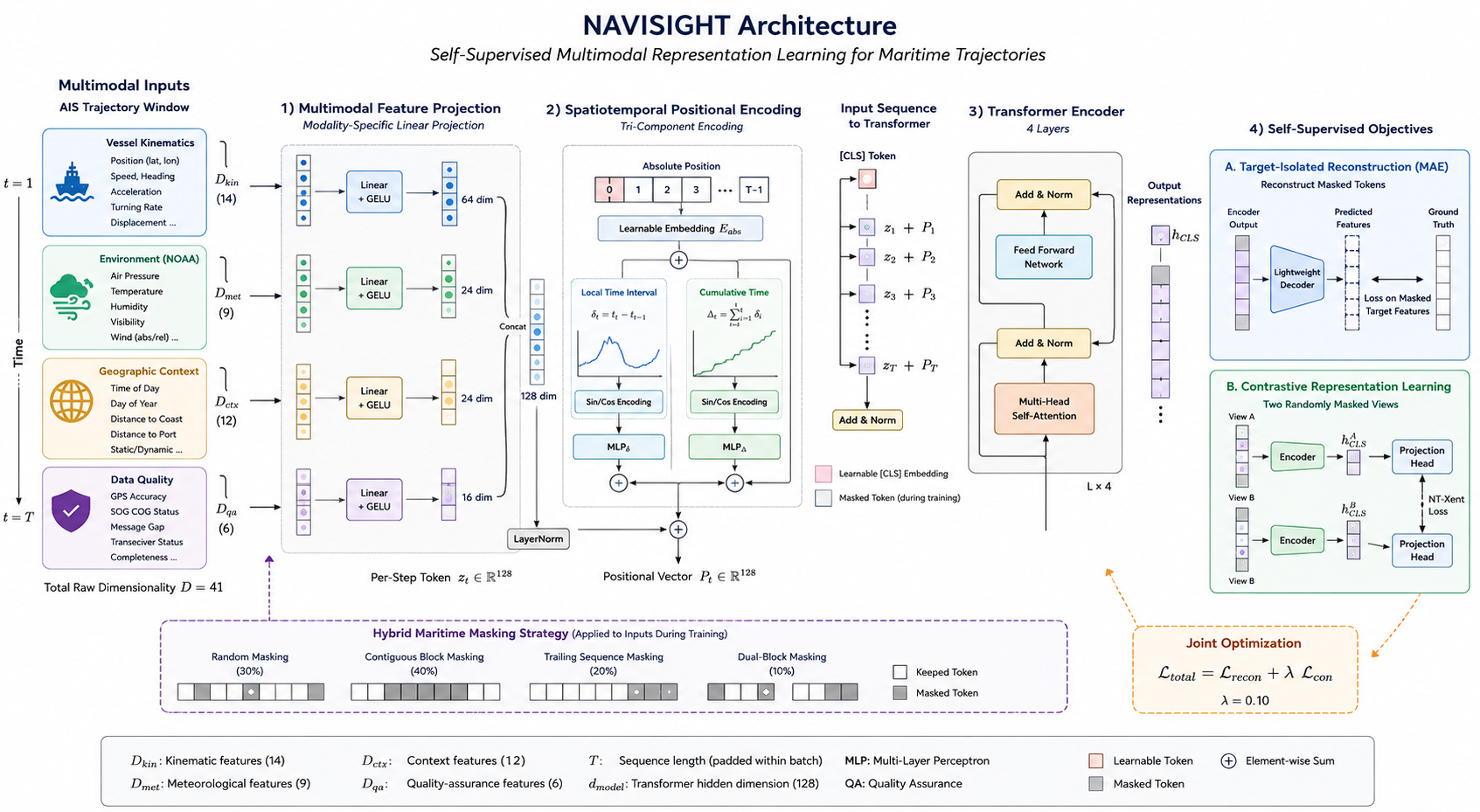
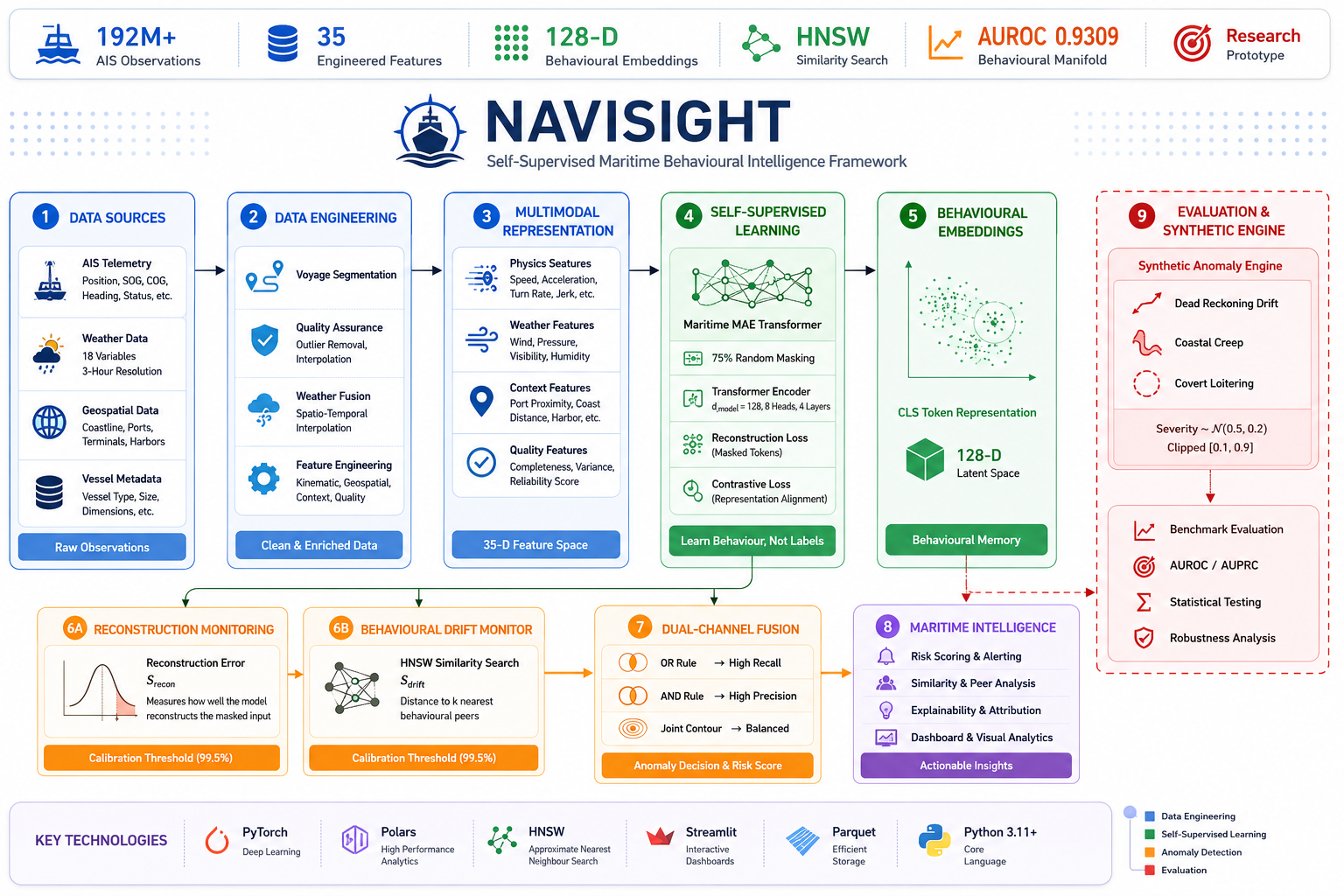
Foundation Model Architecture

Learning Pipeline

Representation Learning Workflow

AIS
Weather
Feature Engineering
Transformer Encoder
Latent Space
Memory Bank
Anomaly Detection
Model Components

MaritimeMAE

Transformer encoder trained using masked reconstruction.

Dual-Channel Detector

Reconstruction + manifold drift anomaly detection.

Latent Memory Bank

Behavioural embedding retrieval.

Representation Evaluator

Operational intelligence through latent analysis.

Benchmark Results

Performance

0.93

Representation AUROC

192M

AIS Observations

Transformer

Self-Supervised Learning

Ocean Engineering

Journal Submission

Methodology

Overview of NAVISIGHT

Various pipelines and processes from data ingestion to inference

Gallery

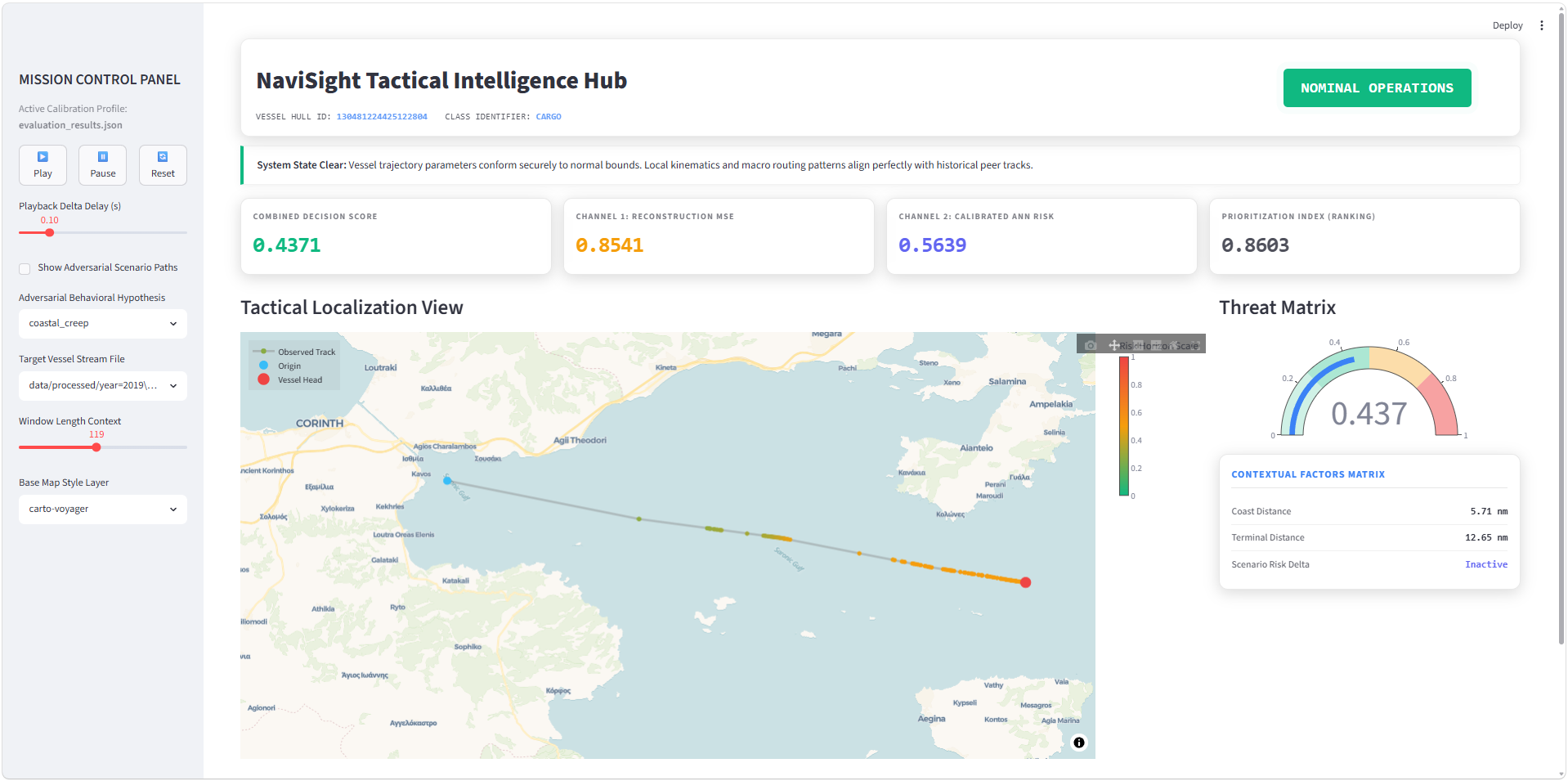
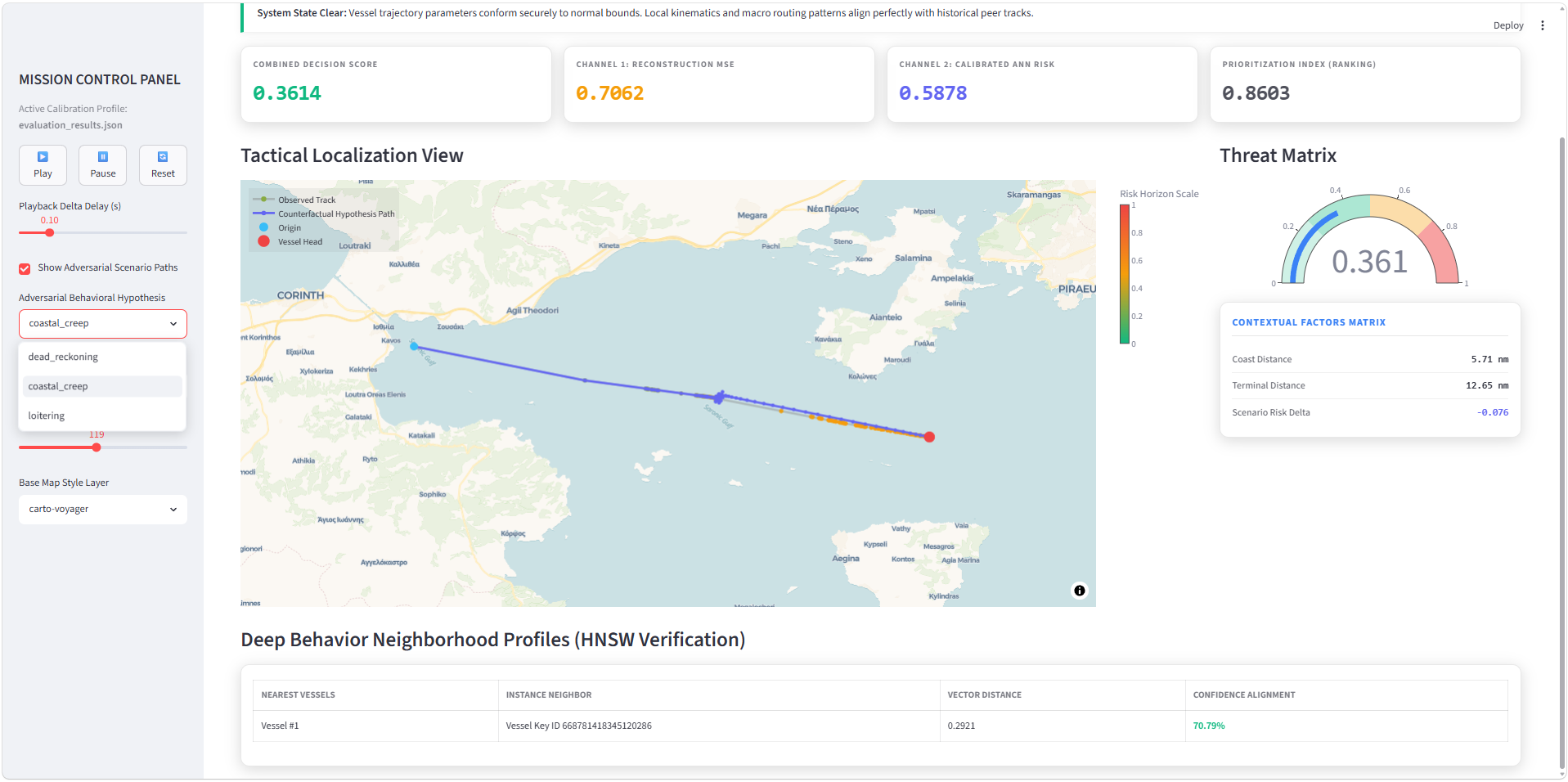
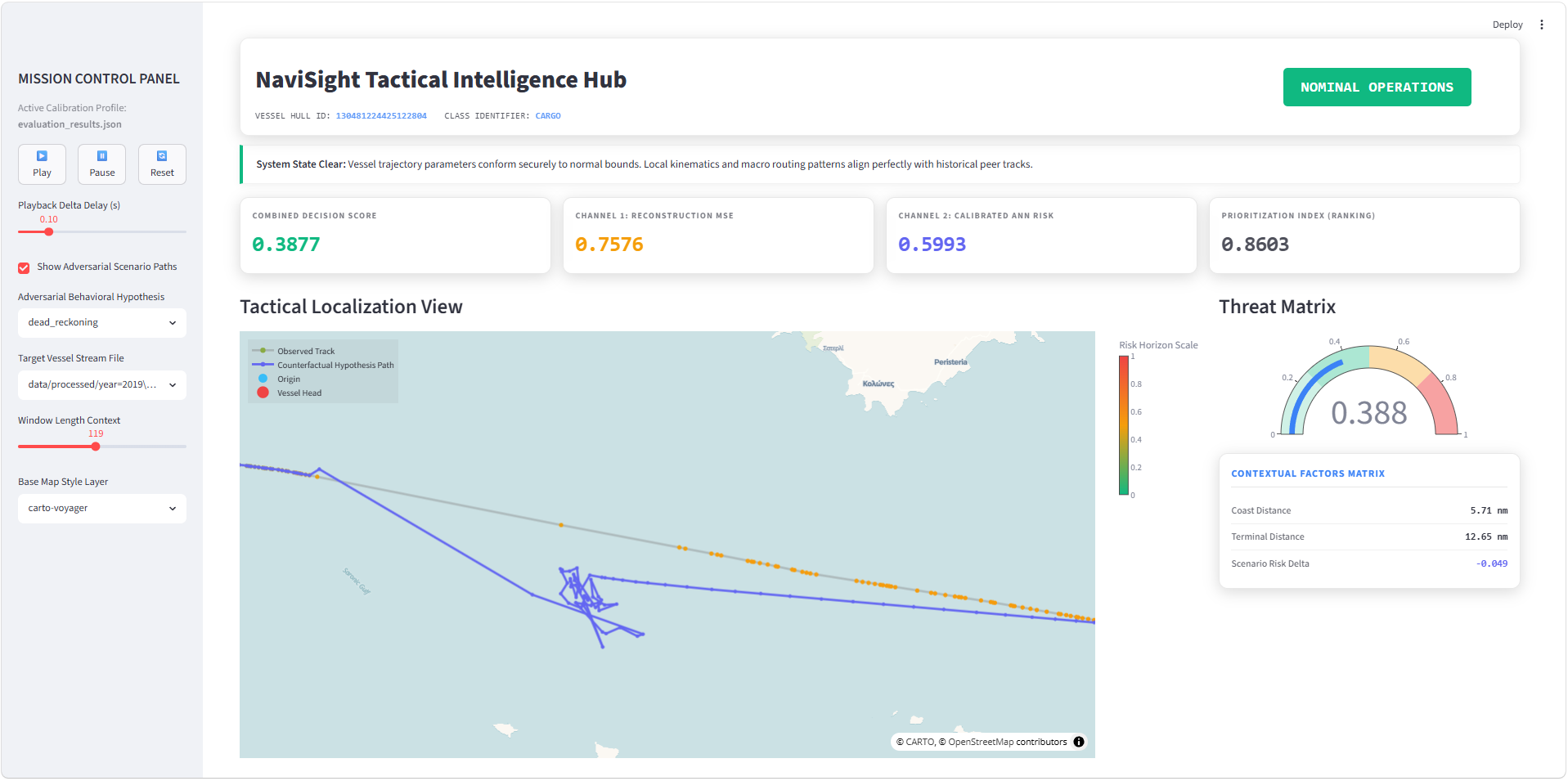
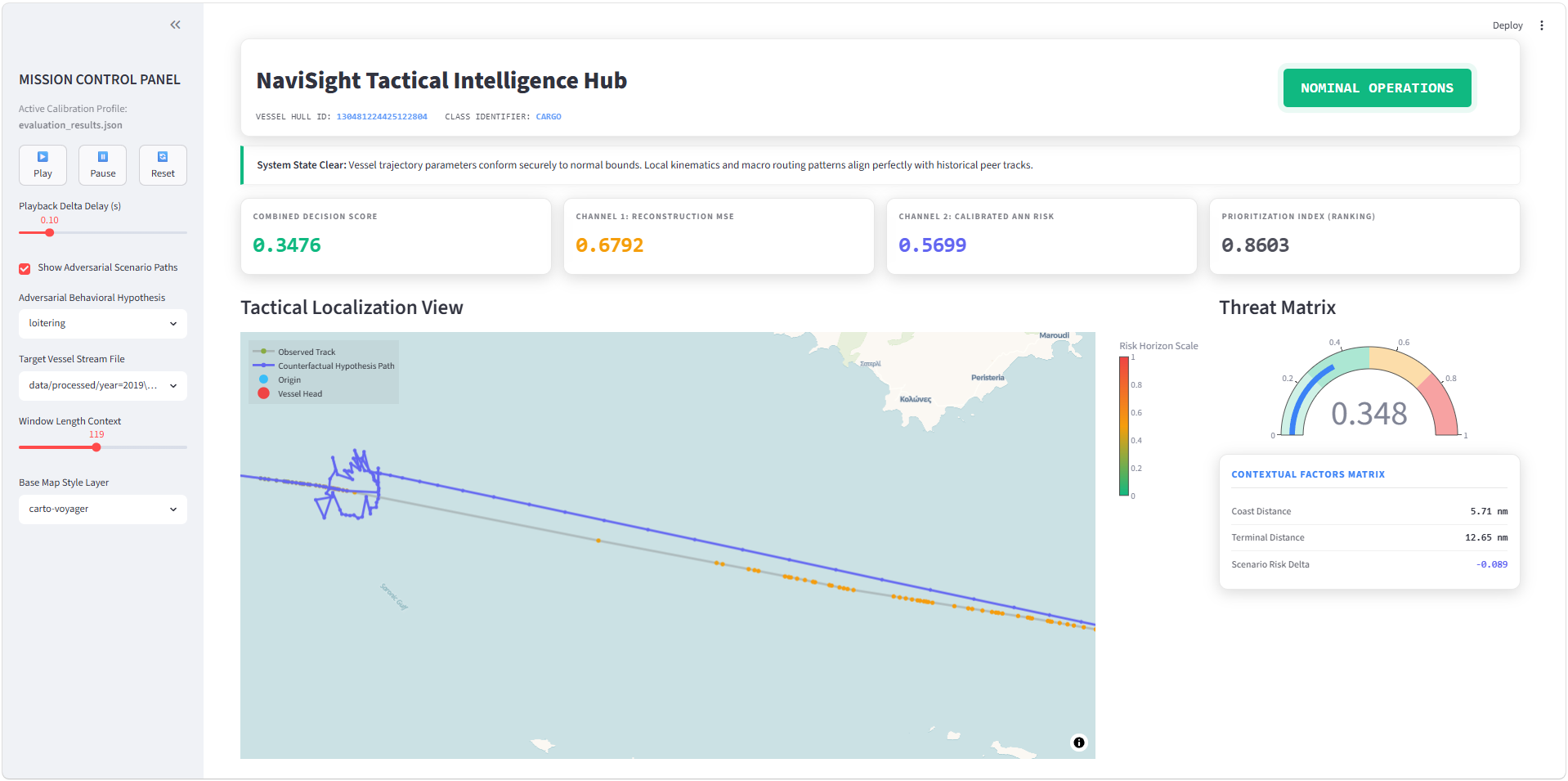
Dashboard

Screenshots showing overview of dashboard and various anomalies

Research Paper

Publication

NAVISIGHT A Self-Supervised Maritime Anomaly Detection Framework for AIS Trajectories Submitted to Ocean Engineering

Future Roadmap

Foundation Maritime LLM

Trajectory Forecasting

Port Intelligence

Fleet Behaviour Modelling